Web3 Community Growth Strategy: Costly Mistakes That Kill Startups
Need effective Web3 marketing?
Get on a free strategy call with Disence
We've helped 120+ Web3 teams launch effective KOL campaigns, build engaged communities, and acquire long-term users. Get 30 minutes of clarity without a pitch.
Book a free strategy call →No commitment · We usually respond within 24h.
Everyone talks about Web3 community management like it’s the secret weapon, yet nearly 90% of Web3 startups still fail within five years. Despite $112B flowing into the space, 7 out of 10 projects don’t even survive their first year, which makes one thing painfully clear: money and hype aren’t the problem. Building a real, lasting community takes far more than funding alone.
Our work with Web3 projects shows that smart marketing and strategy make the real difference between success and failure. Many founders start with big ideas and dreams of revolutionizing digital systems. The reality of building Web3 communities proves much more challenging than expected. The market still holds promise, with total cryptocurrency market value reaching about $3.16 trillion by January 2026. But poor community involvement continues to block wider adoption and steady growth.
This article breaks down the expensive mistakes that sink Web3 startups and offers useful solutions to help your project succeed where others couldn’t.
The Most Common Web3 Community Growth Mistakes
Web3 projects often fail because founders don’t understand what community really means in this space. Your community serves as the foundation of the Web3 project, not just a marketing tool. Users become stakeholders, ambassadors, and co-builders who need different ways to get involved at each development stage.
Research shows 90% of Web3 startups fail because they don’t connect with their community well enough and use poor marketing strategies. The “build it and they will come” mindset hurts Web3 projects the most, especially when you have community participation as the key to success.
Major mistakes include:
Projects treat communities as quick hype generators. They rely on airdrops and giveaways that boost numbers temporarily without building real loyalty. These tactics attract speculators instead of users who care about your project’s vision.
Projects don’t connect with communities meaningfully. Successful projects let their community participate in governance, beta testing, and feedback loops.
Projects create too much mental strain. Web3 users often quit using products because they get tired, not because they lose interest. They struggle to choose chains, pay gas fees, confirm transactions, and figure out errors.
Projects focus only on crypto-natives while pushing away mainstream users. This closed-off approach creates an echo chamber where projects mistake speculation-driven activity for real adoption.
Web3 communities grow best when projects understand that they keep users through education, recognition, and stories that connect everyone to a shared goal, not just through rewards.
Community Engagement Mistakes That Kill Momentum
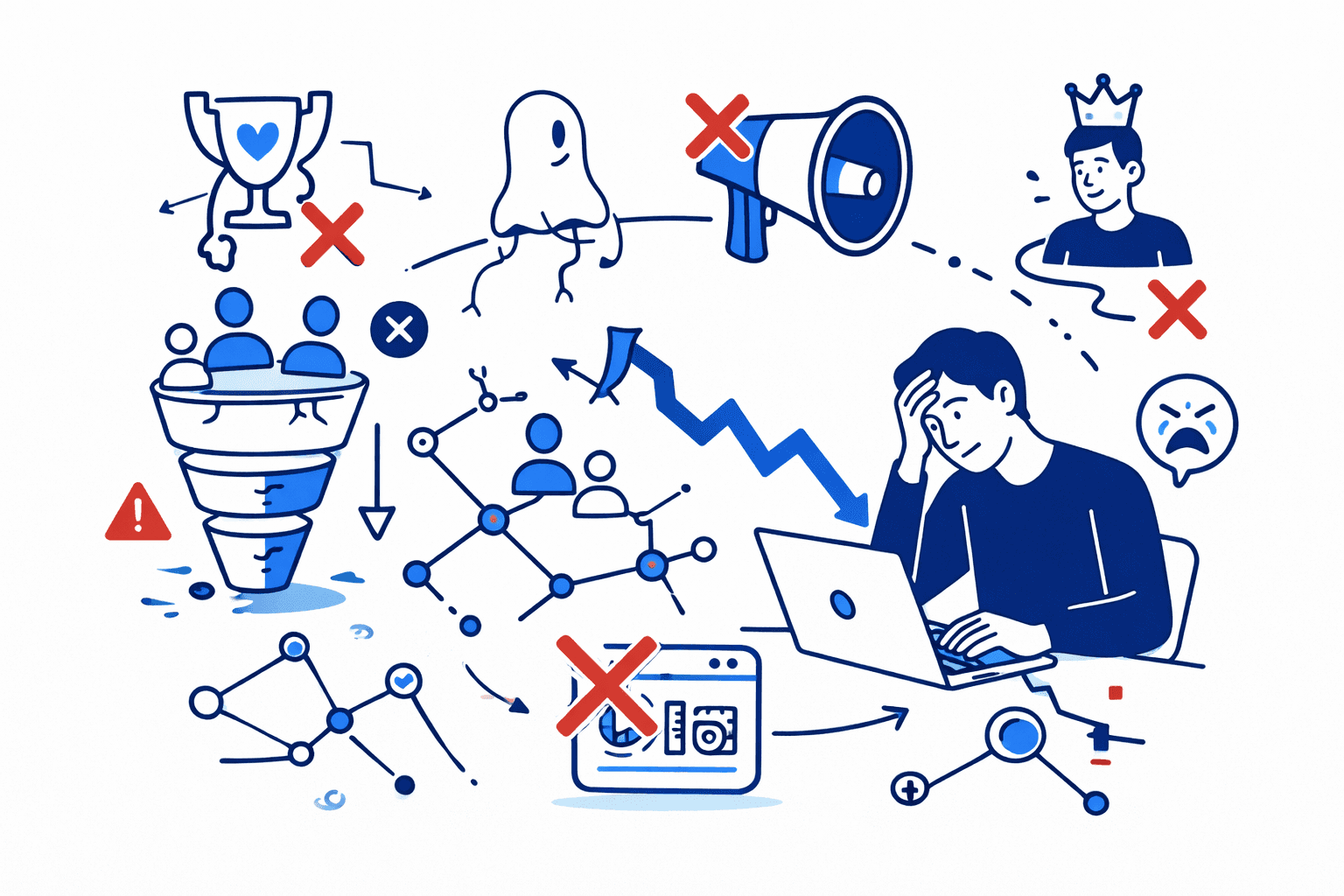
Trust is the foundation of Web3 communities. Many startups damage their momentum because they don’t know how to involve their members properly. Research shows that communities only create network effects when members are deeply involved, not just temporarily motivated by token rewards.
Silence is the biggest momentum killer. Projects lose credibility instantly when they go quiet during bear markets or tough times. Many startups mistake simple Discord activity with “GM” messages and casual hellos as true involvement. Their moderators just show up without building meaningful connections or conversations.
Twitter Spaces and AMAs are powerful tools that many projects ignore. These tools build transparency and trust through direct human connections in an industry where anonymous entities find it hard to succeed. On top of that, poorly designed token rewards tend to attract temporary users instead of loyal community members.
Web3 projects still rely heavily on Web2 platforms like Telegram and Discord. These platforms don’t have the web3-native features needed for decentralized ownership and true decision-making power. So community members can’t fully take part in or benefit from their community’s success.
The most serious issue affects projects that delay building active communities. They end up depending on hype rather than authentic involvement.
Fixing the Gaps: Smarter Web3 Community Growth Strategy
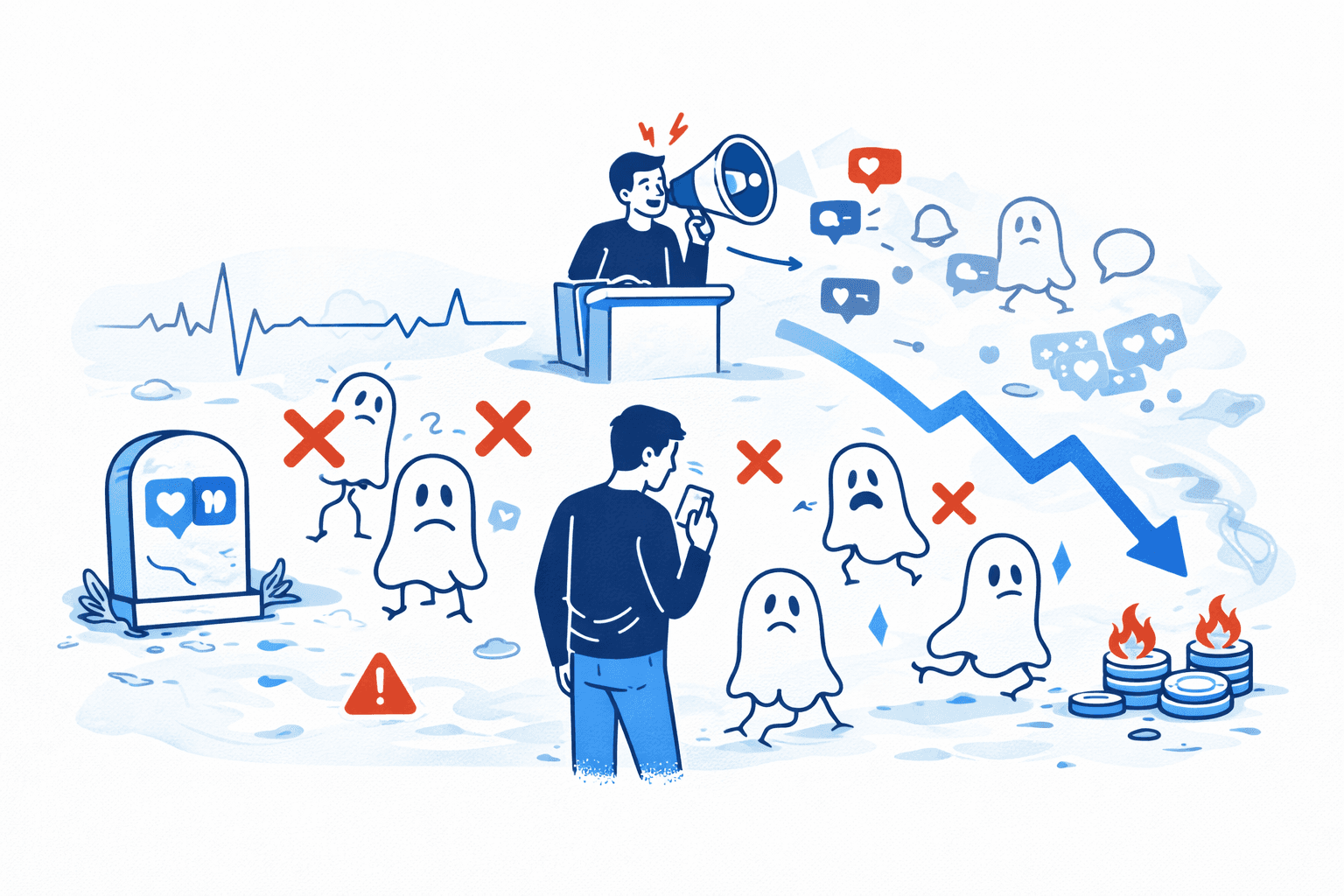
Smart Web3 projects know that community-led growth puts users at the center of their expansion plans. They skip traditional marketing and utilize organic involvement to create self-sustaining growth loops. A better web3 community management strategy starts when you pick the right platforms where your target audience hangs out, we focused on Discord, Twitter, and Telegram. All the same, picking platforms is just the beginning.
Community quests with leaderboard rewards and gamified tasks spark natural involvement. Ambassador programs help train super-fans to lead outreach efforts. Badges that prove on-chain participation give real recognition to people who help the community.
Your web3 community grows faster when you build in public. Show your goals, activities, and challenges openly to build trust. This open approach creates tighter feedback loops between your work and your community’s needs.
Look inside your current community to find moderators instead of hiring outsiders. Active members know your vision and values better. Networking across communities is a great way to get advantages too. You can reach new users without starting over.
Token incentives need careful planning. Early product adoption speeds up with tokens, but badly designed rewards will end up hurting community building efforts. Expert tokenomics consultants help arrange incentives that reward real participation rather than speculation.

Conclusion
Web3 startups face tough challenges even as money pours into the space. The high failure rate stems from basic misunderstandings about what community means in this ecosystem.
This piece shows how winning projects treat communities as resilient infrastructure, not marketing assets. Community members serve as stakeholders, ambassadors, and co-builders who need smart strategies that match each growth stage.
We found several mistakes that get pricey - from using communities as short-term hype machines to overwhelming users with complex tasks. A pattern emerges here. The best Web3 projects focus on real involvement, education, and shared goals instead of speculation and token prices.
Trust builds communities from the ground up. Successful projects stay transparent by building openly and talking regularly in good times and bad. Your target audience’s preferred platforms are the foundations for natural growth.
Community quests with game elements, ambassador programs, and on-chain recognition create growth loops that help expand sustainably. These pieces work together to build communities that stay strong through market ups and downs.
Web3 startups need community-led growth that values real participation over quick excitement. Users who feel true ownership and connection become your strongest supporters.
If your project is serious about scaling visibility and trust through KOL marketing, our team at Disence can help. As the leading Web3 KOL marketing agency, we specialize in ROI-driven KOL campaigns that consistently deliver measurable growth. With access to 1,200+ vetted KOLs across YouTube, Twitter, TikTok, and Telegram, we maintain 91% client retention rate, we know what it takes to make your campaign perform. Book a call with our team to start planning your next Web3 KOL marketing campaign today.
The Web3 space offers huge potential as markets expand. Success comes from avoiding engagement mistakes that end many promising startups. Your project’s success, whether new or needing a fresh start, depends on real involvement, smart incentives, and clear communication. These elements help join the 10% of Web3 startups that last.