Token Launch Cost in 2026: Full Breakdown ($5K–$500K+)
Need effective Web3 marketing?
Get on a free strategy call with Disence
We've helped 120+ Web3 teams launch effective KOL campaigns, build engaged communities, and acquire long-term users. Get 30 minutes of clarity without a pitch.
Book a free strategy call →No commitment · We usually respond within 24h.
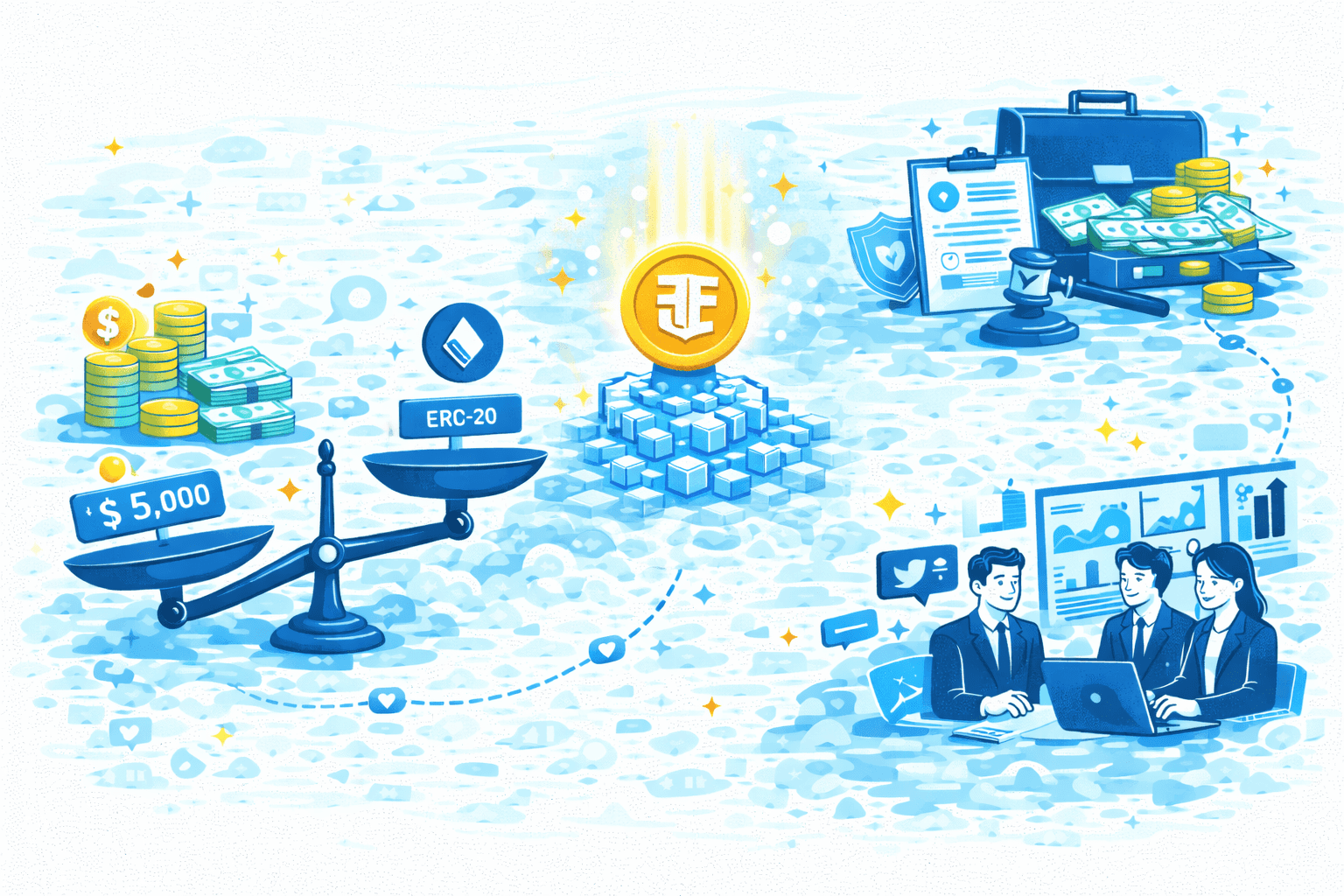
Launching a token in 2026 costs anywhere from $5,000 to over $500,000, depending on your technical complexity, regulatory requirements, and go-to-market strategy. That range isn’t a vague estimation. It’s the reality of a market where a basic ERC-20 deployment on Ethereum runs you $5,000 to $15,000, while a full-featured platform with custom blockchain integration, legal compliance across multiple jurisdictions, and professional marketing can easily exceed half a million.
The crypto exchange market has grown from $35 billion in 2023 to a projected $350 billion by 2033, and investor expectations have hardened with it. Clean websites and ambitious roadmaps no longer open wallets the way they did in 2021.
What drives these costs? Smart contract development is just the entry fee. Legal structuring, security audits, exchange listing fees, liquidity provisioning, and marketing execution each carry their own price tags.
This article covers every major expense category: development work, legal and compliance fees, marketing and community building, exchange listings, and the hidden costs that catch underprepared teams off guard.
Breaking Down Token Launch Costs
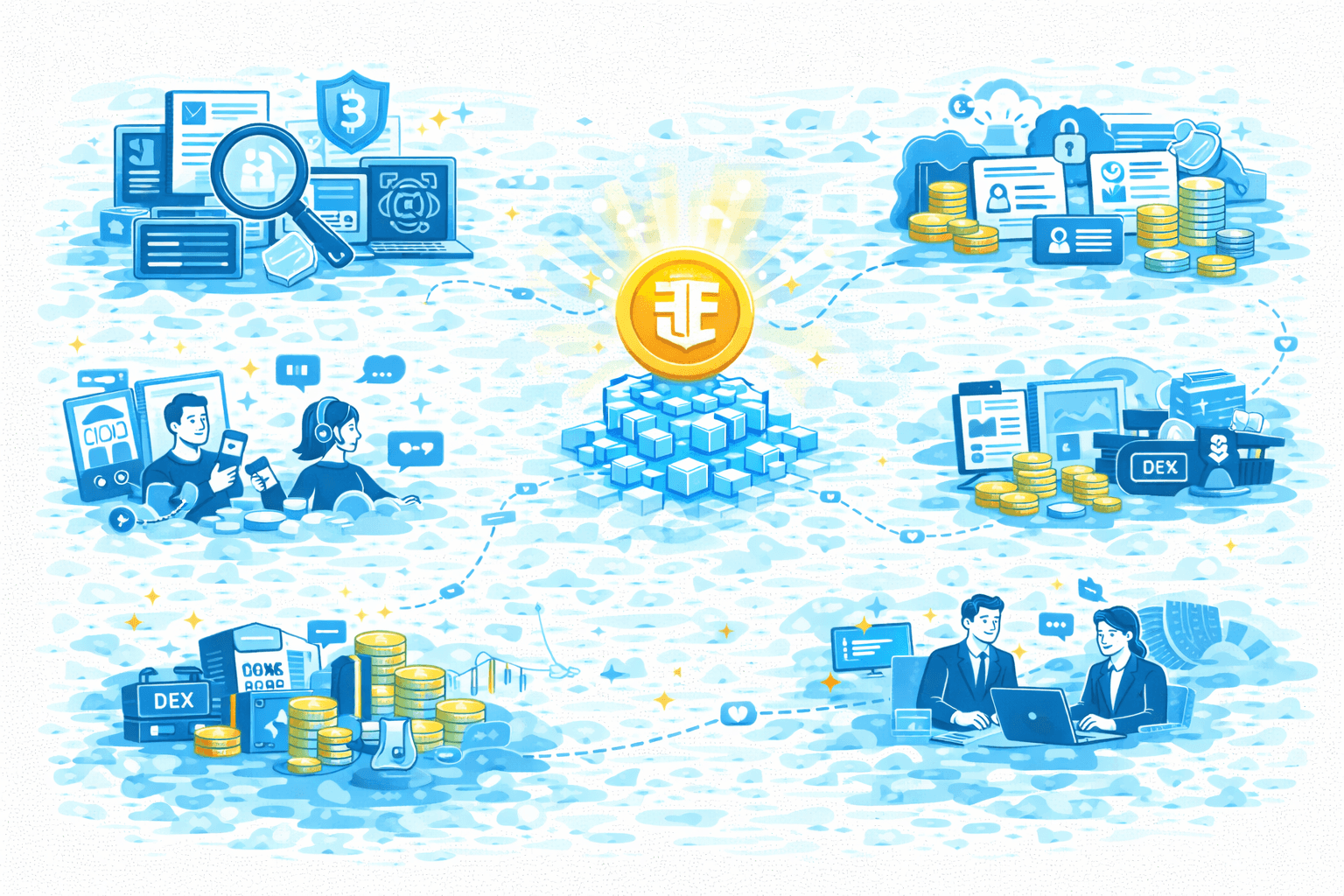
Each cost category reveals where your budget actually goes when planning a new token launch.
Smart Contract Development and Audit Costs
Basic ERC-20 or SPL tokens run $6,000 to $12,000 and deploy within a week. Add anti-bot protection, and you’re looking at $10,000 to $18,000. Tax tokens with custom buy/sell logic cost $13,000 to $23,000. ERC-404 hybrid contracts jump to $18,000 to $32,000 because of dual tokenomics and gas optimization demands.
Security audits add another $8,000 to $40,000, depending on complexity. Last but not least, if you want multi-chain systems with advanced architecture, expect $150,000 to $500,000 or more.
Legal Structure and Compliance Expenses
Legal infrastructure spans $15,000-$200,000+ for original setup, depending on jurisdiction complexity. Compliance reviews cost $5,000-$200,000 each year. Professional asset appraisal and documentation add $5,000-$50,000.
Platform Infrastructure and KYC Integration
KYC/AML integration through third-party providers costs $10,000-$30,000 upfront. Blockchain integration and node management need $10,000-$50,000 for the original setup. Cloud hosting and infrastructure maintenance run $5,000-$30,000 each year.
KOL Marketing and Community Building Budget
Top-tier KOLs with 500K+ followers charge $10,000+ per deliverable. Mid-tier influencers (50K-200K) bundle services at $4,000-$7,000. Micro-influencers cost $200-$2,000. Community setup and moderation require ~$3,000 each month.
Exchange Listings and Liquidity Setup
Tier 1 exchanges like Binance demand $150,000-$500,000+ in listing fees. Tier 2 platforms cost $80,000-$300,000. Tier 3 entry exchanges range from $30,000-$80,000. Minimum liquidity requirements scale with launch goals, from $10,000-$20,000 for tests to $200,000-$500,000+ for major launches.
Post-Launch Operations and Maintenance
Teams budget 10-20% of development cost each year for maintenance, around $3,000-$12,000 each month. Security monitoring adds $2,000-$10,000 per month.
Token Launch Budget Projection
Budget projections change dramatically based on three core variables that determine your total token launch cost.
Token Type and Complexity Level
Token architecture defines your baseline budget. Utility tokens for platform usage need simple smart contracts. Governance tokens add voting mechanisms and DAO infrastructure. Security tokens represent the highest complexity tier and require advanced compliance layers, mandatory KYC/AML integration, legal structuring, and rigorous audit protocols. These regulatory requirements drive costs to $15,000-$50,000 or more.
RWA tokens need asset appraisal and documentation layers. Meme tokens prioritize community features over technical sophistication.
Blockchain Selection
Your blockchain choice carries direct cost implications. Ethereum development ranges from $8,000-$30,000+ due to complex smart contracts, higher audit requirements, and gas optimization needs. BNB Chain offers budget-friendly deployment at $4,000-$15,000 and makes it popular among startups. Solana tokens cost $6,000-$20,000 but need specialized expertise in high-performance architecture. Polygon and Layer 2 networks provide Ethereum compatibility at $5,000-$18,000. Enterprise-grade private blockchains require custom architecture and permissions, which drive costs to $25,000-$100,000+.
Security and Audit Requirements
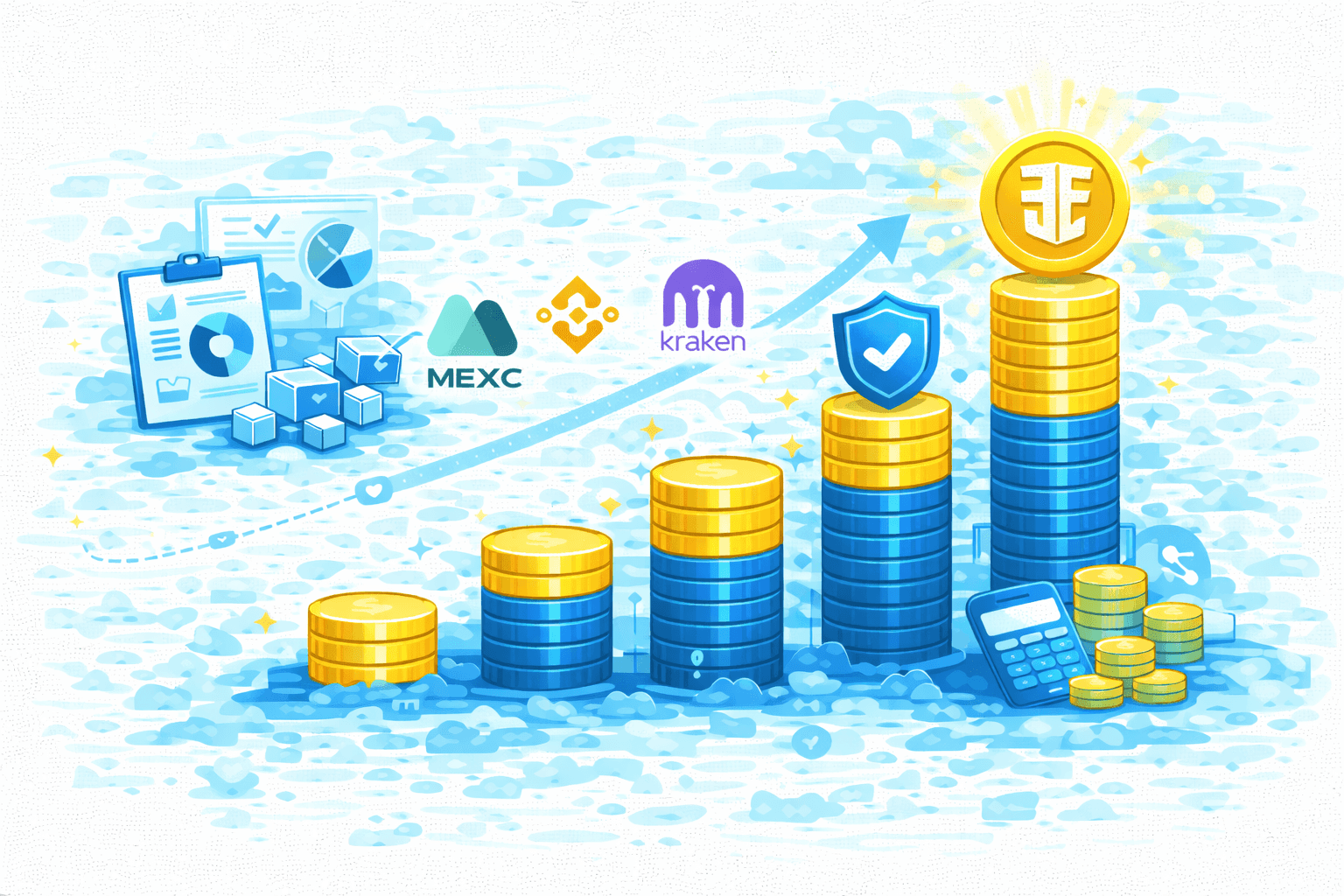
Audit pricing scales with code complexity and risk exposure. Simple ERC-20 contracts cost $10,000-$20,000 for straightforward audits. Mid-tier projects like DeFi protocols need deeper scrutiny at $20,000-$50,000. Complex cross-chain systems reach $75,000-$150,000+. Post-audit vulnerability fixes add 10-20% to development cost. Your complete token launch budget spans:
$35,000-$70,000 for MVP launches
$75,000-$150,000 for mid-range platforms
$150,000-$300,000+ for enterprise infrastructure.
Token Launch Marketing: 3 Phases
Token launch marketing operates in several phases, each of which requires different strategies and resource allocation that affect your overall token launch cost.
Pre-Launch Community Building
Your community groundwork starts four to six months before the token sale. For example, you start with an:
Alpha phase with 500 handpicked members, which provides direct team access and significant feedback.
Beta phase expands to 5,000 members and has ambassadors and ecosystem partners.
Public phase opens to 10,000+ with tiered permissions and structured moderation. Tier 2 exchanges require 50K+ followers on X or Telegram before taking calls. This makes early growth significant.
Plan an 8-week run-up before your TGE and publish two to three good news stories weekly. Focus on narrative formation and token utility framing rather than artificial hype. Weekly updates through AMAs, newsletters, and video explainers build trust through education. Additionally, quest-based campaigns collect data while growing your audience.
Launch Day Campaign Execution
Launch day is where months of preparation either hold together or fall apart.
Technical readiness comes first: Run final contract checks, confirm exchange integrations, and lock in liquidity hours before going live. Your dev team should be monitoring in real-time with direct lines to exchanges.
Coordinate communications ruthlessly: Press releases, social posts, emails, and community updates hit simultaneously. One person controls timing across every channel.
Go live with your community: Run an AMA or Twitter Space during launch. Give your audience direct access to founders and answer concerns in real-time. Transparency during volatility builds trust.
Monitor obsessively:
Wallet connections and transaction volume
Liquidity depth across exchanges
Social sentiment and community questions
Unusual contract activity
Set up alerts, the teams that spot problems early and communicate fast survive launch day chaos. Know who makes decisions, who talks to the community, and who fixes technical issues before something breaks.
Post-Launch Growth and Retention
Retention outweighs acquisition after launch day. Staking models let users lock tokens for governance participation. This creates demand and reduces circulating supply. Quest systems reward active participation through daily, weekly, and seasonal challenges. Track Activity Retention for regular transaction participation and Holder Retention for continued asset holding separately. Token velocity reveals how fast tokens move through your ecosystem. High velocity often signals weak utility.

Hidden Costs When Planning a New Token Launch
Most token budgets ignore the expenses that compound monthly after your new token launch.
Treasury Management and Market Making Fees
Market makers charge through service fees, spread retention, or token loan arrangements. The bid-ask spread gets them revenue. A $0.08 spread on $8 million in matched trades produces around $8,000 in spread revenue. Treasury operations require dedicated management infrastructure and continuous monitoring systems.
Regulatory Adaptation and Legal Reviews
KYC/AML frameworks cost $2,000-$10,000 monthly, depending on user volume. Regulations change due to SEC crackdowns and EU MiCA requirements. Compliance teams must scale, and data systems must mature.
Smart Ways to Reduce Your Token Launch Costs
Cutting your token launch cost requires strategic decisions made early in the planning process.
Choosing the Right Development Approach
Modern tokens use modular components instead of monolithic contracts. Separate transfer logic, governance, staking, and compliance modules improve auditability and allow targeted upgrades without redeploying the whole system. Gas efficiency profiling during development reduces transfer costs by over 40% through better state management. Strong teams save money through planning and fewer launch issues. Expect 2 to 4 weeks for serious planning that has tokenomics and clear distribution paths.
Prioritizing Essential Features First
Map what can be extended later versus what must be decided now. This prevents costly rewrites during audit. Launch with focused feature sets that demonstrate trustworthiness while reducing original development expense.

Staging Your Launch to Spread Costs
A structured rollout helps avoid unnecessary costs. Start with the core features, then add derivatives, staking, or advanced tools only when there’s real demand and compliance is in place.
Leveraging Existing Infrastructure and Tools
White-label frameworks allow compliance customization while avoiding years of engineering expense. Using existing solutions reduces development timelines significantly.
Planning Treasury Allocation Wisely
Liquidity planning shapes earlier decisions. Determine original liquidity size, pair selection, and timing before development begins to avoid messy setups that break trading.
Conclusion
Token launches in 2026 just need realistic budgeting from the start. We’ve shown you that costs range from $35,000 for simple MVPs to $300,000+ for enterprise platforms. Smart founders prioritize core features and choose appropriate blockchain networks while staging their rollouts.
Plan for hidden costs like market making, community management and ongoing compliance. You can launch successfully without burning through unnecessary capital with proper planning and resource allocation.
If your project is serious about scaling visibility and trust through KOL marketing, our team at Disence can help. As the leading Web3 KOL marketing agency, we specialize in ROI-driven KOL campaigns that consistently deliver measurable growth.
With access to 1,200+ vetted KOLs across YouTube, Twitter, TikTok, and Telegram, we maintain 91% client retention rate, we know what it takes to make your campaign perform. Book a call with our team to start planning your next Web3 KOL marketing campaign today.